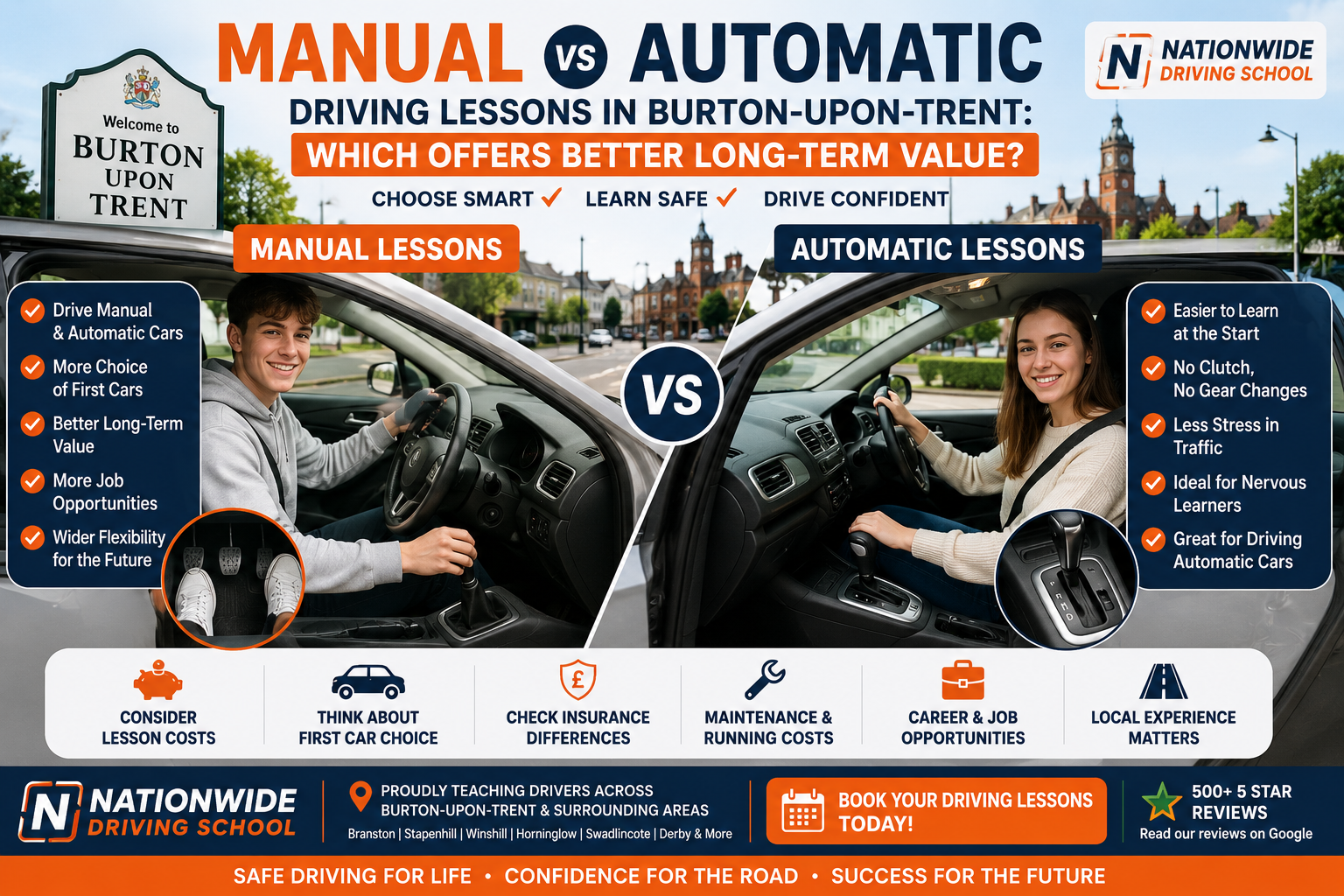
Manual vs Automatic Driving Lessons in Burton-upon-Trent: Which Offers Better Long-Term Value?
When you decide to learn to drive in Burton-upon-Trent, one of the first decisions you need to make is whether to choose manual or automatic driving lessons. At first, automatic lessons can look very tempting. There is no clutch pedal, no gear changing, and no risk of stalling at a busy junction. For some learners, that simpler driving experience can feel less stressful.
Manual lessons, on the other hand, require more coordination. You need to learn clutch control, gear changes, hill starts, and how to manage the car smoothly in different traffic situations. This can feel more challenging at the beginning, especially for nervous learners.
However, learning to drive is not only about the first few lessons. A driving licence is a long-term investment. It can affect the type of car you can drive, the first car you can buy, your insurance options, future job opportunities, and how much flexibility you have later in life.
For many learners in Burton-upon-Trent, manual driving lessons can offer stronger long-term value. That does not mean automatic lessons are wrong. Automatic can be the right choice for some learners. The best option depends on your confidence, budget, future plans, and the type of driving freedom you want after passing.
At Nationwide Driving School, we offer both manual and automatic driving lessons, helping learners choose the right route based on individual needs. This guide explains the real differences between manual and automatic lessons so you can make a confident decision before booking.
Manual vs Automatic: What Is the Main Difference?
The biggest difference is how the car is controlled.
In a manual car, the driver uses a clutch pedal and gear stick to choose the correct gear. This means the learner must coordinate the clutch, accelerator, brake, steering, mirrors, and road position at the same time.
In an automatic car, the vehicle changes gear for you. There is no clutch pedal, which means the learner can focus more on steering, braking, acceleration, road position, and observations.
The licence difference is also important.
If you pass your driving test in a manual car, you can drive both manual and automatic vehicles.
If you pass your driving test in an automatic car, your licence only allows you to drive automatic vehicles.
This is one of the biggest reasons many learners still choose manual lessons. A manual licence gives more freedom after passing.
Which Is Easier to Learn?
Automatic driving is usually easier at the start because there are fewer controls to manage. A learner does not need to worry about stalling, finding the biting point, or changing gear at the right time. This can help some learners feel more relaxed in the early stages.
Automatic lessons may be a good choice for:
- Very nervous learners
- Learners who struggle with clutch control
- Learners who only plan to drive automatic cars
- Learners who want a simpler vehicle control process
- Learners with certain physical needs
Manual lessons can take more practice at first, but many learners improve quickly with the right instructor. Once clutch control and gear changes become familiar, manual driving starts to feel natural.
Manual lessons may be a good choice for:
- Learners who want full licence flexibility
- Learners who want more first-car options
- Learners who may need to drive work vehicles in future
- Learners looking for better long-term value
- Learners who want to drive both manual and automatic cars
If you are unsure which option is right for you, a good driving instructor can help you understand your learning style and long-term goals.
Lesson Costs: Manual vs Automatic
Lesson prices vary depending on location, instructor availability, vehicle type, and lesson structure. In many areas, automatic lessons can cost slightly more per hour than manual lessons because automatic training cars can be more expensive to buy, maintain, and repair.
However, price per hour is not the only thing to consider. Some learners may need fewer automatic lessons because the car is simpler to control. Other learners may take a similar number of hours because road awareness, junction planning, roundabouts, speed control, and hazard perception still need to be mastered.
Driving test success is not based only on controlling the car. The examiner will assess how safely and independently you drive in real traffic.
Learners in Burton-upon-Trent need to build confidence on local roads such as town centre routes, Derby Road, Horninglow Road, Branston Road, St Peter’s Bridge, Winshill, Stapenhill, and routes leading towards the A38. These roads require planning, awareness, judgement, and confidence, whether you are driving manual or automatic.
For a deeper look at the financial side of manual learning, read our related guide:
Is a Manual Licence Cheaper in Burton-upon-Trent?
First Car Choice: Why Manual Can Offer More Options
After passing the test, many new drivers want to buy a first car. This is where manual and automatic licences can create very different options.
The UK used car market has traditionally had a large number of manual small cars. These cars are often popular with new drivers because many are affordable, simple, and widely available.
Common first cars include:
- Ford Fiesta
- Vauxhall Corsa
- Volkswagen Polo
- Toyota Yaris
- Hyundai i10
- Hyundai i20
- Kia Picanto
- Renault Clio
- Peugeot 208
Manual versions of these cars are often easier to find in lower price ranges. Automatic versions can sometimes cost more, especially in the budget first-car market, because there may be fewer available.
A manual licence gives you more choice because you can buy either a manual or automatic car. An automatic-only licence restricts your search to automatic cars only.
For parents helping a teenager buy a first car, this extra choice can be useful. More choice means more opportunity to compare price, insurance group, service history, MOT history, mileage, and repair costs before buying.
You can also read our related insurance guide here:
Why Used Manual Cars Can Save Burton Teens Money on Insurance
Insurance: Which Option Is Better?
Car insurance is one of the biggest costs for new drivers. Insurance prices depend on many factors, including the driver’s age, postcode, car model, insurance group, claims history, annual mileage, where the car is kept, and whether a black box policy is used.
It is not accurate to say every manual car is cheaper to insure than every automatic car. The exact quote depends on the car and the driver. However, a manual licence can give new drivers more cars to compare, which can help when looking for a more affordable insurance option.
Before buying a first car, always compare insurance quotes first. A car may look cheap to buy, but it might be expensive to insure.
It is also sensible to check the car’s MOT history before making a decision. You can use the official GOV.UK MOT history checker to review previous MOT results, mileage records, and advisories.
Maintenance and Running Costs
Running costs are another important part of long-term value. Once you pass, you will need to think about fuel, servicing, MOT, tyres, brakes, repairs, insurance renewal, and general maintenance.
Manual cars can often be simpler to repair, especially older and smaller first cars. Clutch replacement is a common manual car repair, and many garages are familiar with this work.
Automatic gearboxes can be more complex. Many modern automatic cars are reliable, but if an automatic gearbox does develop a serious problem, repairs can be more expensive. This is especially important in the lower-budget used car market where repair costs can quickly become a major issue.
This does not mean automatic cars should be avoided. Many automatic cars are excellent. It simply means new drivers and parents should think carefully about total ownership costs, not only lesson prices.
Career Opportunities and Work Vehicles
A driving licence can also affect future job opportunities. This is especially important for learners in Burton-upon-Trent, Swadlincote, Derby, Lichfield, Uttoxeter, Tamworth, and nearby areas where many jobs involve travel, trade work, logistics, care work, construction, delivery work, and apprenticeships.
Many company vans and work vehicles are still manual. A manual licence can help young drivers apply for more roles because it allows them to drive both manual and automatic vehicles.
This can matter for:
- Electricians
- Plumbers
- Carpenters
- Builders
- Delivery drivers
- Care workers
- Field engineers
- Mobile service workers
- Apprentices
- Sales and customer service roles involving travel
An automatic-only licence may limit job options if the employer uses manual vehicles. For some learners, this career flexibility is one of the biggest reasons to choose manual lessons.
What About Electric Cars?
Electric cars are becoming more common, and most electric vehicles are automatic. This leads many learners to ask whether manual driving is still worth learning.
The answer depends on your budget and future plans.
New electric cars are still expensive for many first-time drivers. Many new drivers buy older used petrol or diesel cars first, and the used car market still includes a large number of manual vehicles.
A manual licence does not stop you from driving an electric car in the future. It simply gives you more options now and later.
If your first car is likely to be a small used hatchback, a manual licence may still give you better value and more choice. If you know you will only ever drive automatic or electric cars, automatic lessons may be suitable.
Local Driving in Burton-upon-Trent
Whether you choose manual or automatic, local road experience is essential. Burton-upon-Trent has a mix of town centre traffic, residential streets, roundabouts, busier routes, and nearby faster roads.
Learners may need practice around:
- Burton town centre
- Derby Road
- Horninglow
- Stapenhill
- Winshill
- Branston
- St Peter’s Bridge
- Wellington Road
- A38 routes
- Local test route areas
Manual learners need to build smooth clutch control and gear planning. Automatic learners need to make sure the simpler controls do not lead to rushing decisions. Both types of learners need strong observations, road positioning, mirror use, speed control, and judgement.
The official Highway Code is useful for every learner because it explains rules, signs, road markings, and safe driving responsibilities.
Which Is Better for Nervous Learners?
Nervous learners often wonder whether automatic is the best choice. For some, it can be. Removing the clutch and gears can reduce pressure, especially in the early lessons.
However, nervous learners should not automatically rule out manual. Many learners feel nervous at first but become confident with patient instruction and regular practice.
Manual may still be suitable if the learner wants long-term flexibility and is willing to build confidence step by step.
Automatic may be better if the learner feels overwhelmed by clutch control or has already tried manual and lost confidence.
A good driving school should never pressure a learner into one option. The right choice should be based on confidence, progress, safety, and future needs.
How Parents Can Help Learners Choose
Parents often help with lesson costs, first car costs, insurance, and practice. Before choosing manual or automatic, it is worth discussing:
- What type of car the learner is likely to drive after passing
- Whether a manual licence may help with future work
- Insurance costs for possible first cars
- The learner’s confidence level
- Whether automatic may reduce stress
- Whether manual may offer better value over time
- How much private practice may be available
- Whether block booking lessons could help with progress
Parents should also encourage learners to prepare for the theory test early. You can find official information about the theory and practical test through GOV.UK driving test booking and GOV.UK provisional licence guidance.
Manual vs Automatic: Quick Comparison
Manual Driving Lessons
Manual lessons may be better if you want:
- A full licence with no automatic restriction
- The option to drive manual and automatic vehicles
- More first-car choice
- More flexibility for work vehicles
- Better long-term value in many cases
- A wider range of used cars to compare
Manual lessons may feel harder at first because of:
- Clutch control
- Gear changes
- Hill starts
- Risk of stalling
- More coordination
Automatic Driving Lessons
Automatic lessons may be better if you want:
- No clutch pedal
- No gear changes
- A simpler driving experience
- Less pressure in stop-start traffic
- A route that may suit nervous learners
- A licence for automatic vehicles only
Automatic lessons may be limiting because:
- You cannot drive manual vehicles after passing
- First-car choice may be smaller
- Some work vehicles may not be available to you
- You may need another test if you want manual entitlement later
So, Which Offers Better Long-Term Value?
For many learners in Burton-upon-Trent, manual driving lessons offer better long-term value because a manual licence gives more flexibility. It can help with first-car choice, insurance comparisons, future work opportunities, and the freedom to drive both manual and automatic cars.
However, automatic lessons can still be the right choice for some learners. If automatic helps a learner feel safer, calmer, and more confident, it may be the better route.
The best decision is not always the cheapest decision. The best decision is the one that suits the learner’s confidence, budget, future plans, and driving needs.
At Nationwide Driving School, our aim is to help learners become safe, confident, and independent drivers. Whether you choose manual or automatic, the most important thing is learning properly, building strong habits, and preparing for real driving beyond the test.
Book Manual or Automatic Driving Lessons in Burton-upon-Trent
Nationwide Driving School offers manual driving lessons, automatic driving lessons, beginner lessons, intensive courses, refresher lessons, and local driving support across Burton-upon-Trent and nearby areas.
Our instructors help learners build confidence at a steady pace, with lessons designed around ability, progress, and test readiness.
Book your driving lessons here:
Book driving lessons online
View manual lessons here:
Manual driving lessons
View beginner offers here:
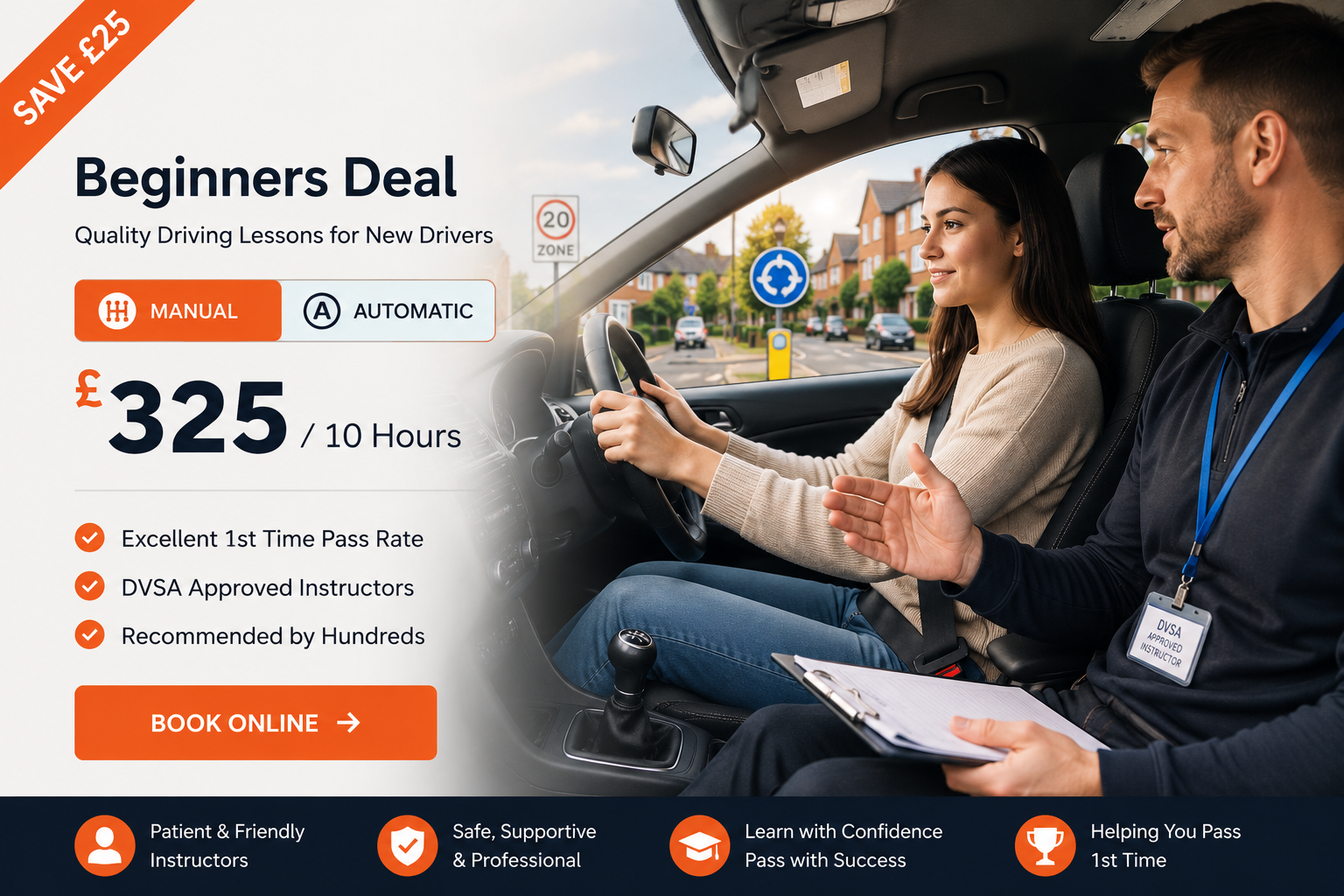
Beginner driving lesson offers
View block booking options here:
Block booking driving lessons
Read our reviews here:
Nationwide Driving School Google reviews
Frequently Asked Questions
Are manual driving lessons cheaper than automatic lessons?
Manual lessons can sometimes be cheaper per hour, but the total cost depends on how many lessons a learner needs. Manual may offer better long-term value because it gives more first-car and job flexibility.
Is automatic easier than manual?
Automatic is usually easier at the start because there is no clutch pedal or gear changing. However, both manual and automatic learners still need strong road awareness, planning, judgement, and safe driving habits.
Can I drive an automatic car if I pass in a manual car?
Yes. Passing in a manual car allows you to drive both manual and automatic vehicles.
Can I drive a manual car if I pass in an automatic car?
No. Passing in an automatic car restricts you to automatic vehicles only. To drive manual, you would need to pass a manual practical driving test.
Is manual better for future jobs?
Manual can be better for some jobs because many vans and work vehicles are still manual. A manual licence can help with apprenticeships, trade work, delivery work, care work, and mobile roles.
Is automatic better for nervous learners?
Automatic may help some nervous learners because there are fewer controls to manage. However, many nervous learners can still succeed in manual lessons with patient instruction and regular practice.
What is best for learners in Burton-upon-Trent?
For learners who want maximum flexibility, manual can be a strong choice. For learners who want a simpler driving experience and plan to drive only automatic cars, automatic may be suitable.
Book Online
Book your driving lessons online with Nationwide Driving School:
Related Links
- Nationwide Driving School
- Manual Driving Lessons in Burton-upon-Trent
- Book Driving Lessons Online
- Beginner Driving Lesson Offers
- Block Booking Driving Lessons
- Manual Licence Cost Guide for Burton-upon-Trent Learners
- Used Manual Cars and Insurance Guide for Burton Teens
- Nationwide Driving School Google Reviews
- Book Your Driving Test on GOV.UK
- Read The Highway Code
- Apply for a Provisional Driving Licence
- Check a Car’s MOT History
- Check Vehicle Tax on GOV.UK
Connect With Us on Social Media