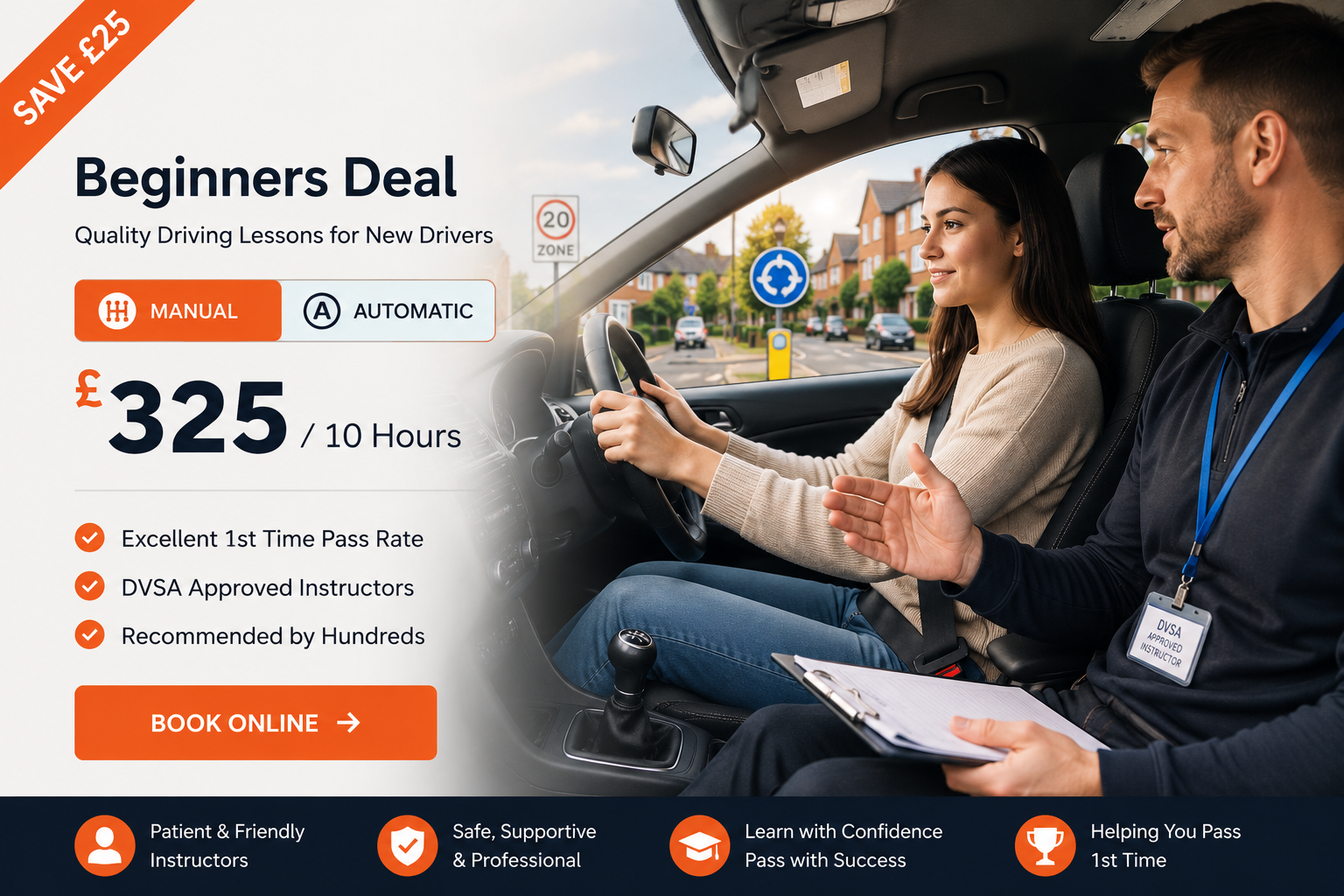
Automatic vs manual driving lessons in Ashbourne is an important choice for a new learner. The right option depends on how you feel behind the wheel, how quickly you adapt to vehicle controls and what type of car you expect to drive after passing. Ashbourne also gives learners a varied environment, including town traffic, rural approaches, hills, bends and faster connecting roads. This guide explains the practical differences so you can make an informed decision without feeling pressured.
What Changes When You Learn in a Manual Car?
A manual car requires you to coordinate the clutch, accelerator and gears. Early lessons often spend more time on moving off, stopping, clutch control and selecting a suitable gear. This can feel demanding at first, especially when approaching junctions or managing a hill start. With patient practice, those actions become part of a normal driving routine.
A manual licence gives you permission to drive both manual and automatic cars. That flexibility can be useful when buying a first car, borrowing a family vehicle or applying for work that involves driving. However, the wider licence is only valuable if manual training suits your learning style and does not create unnecessary stress.
How Automatic Lessons Feel Different
An automatic car removes the clutch pedal and manual gear changes. This lets many learners give more attention to observations, steering, speed, positioning and decisions. Learners who have struggled with stalling or coordinating several controls may feel calmer and make steadier progress.
Automatic does not remove the need for safe judgement. You must still plan at junctions, use mirrors correctly, select safe gaps and respond to pedestrians, cyclists and other traffic. An automatic licence also limits you to automatic vehicles unless you later pass a manual practical test.
Ashbourne Roads and Your Choice of Car
Ashbourne learners may experience quieter residential streets, busy central areas and rural roads around DE6. Manual tuition can help develop careful gear selection on changing gradients and bends. Automatic tuition can reduce the workload when traffic is slow or when frequent speed changes are required.
The car does not make rural driving safe by itself. Good observation, a suitable speed and the ability to stop within the distance you can see remain essential. Your choice should support learning, but the quality of your planning matters more than the gearbox.
Which Option May Suit a Nervous Learner?
Nervous learners often benefit from fewer tasks at the beginning. Automatic lessons may provide that simpler starting point. A learner can concentrate on the road while building confidence in stages. Manual lessons can also work well when instruction is calm, the practice area is suitable and enough time is allowed for repetition.
Do not choose solely because friends say one option is easier. Think about what causes the anxiety. If the concern is clutch control, automatic may help. If the concern is traffic, judgement or a previous experience, changing gearbox may not address the main issue.
Cost, Lesson Numbers and Long-Term Plans
It is not possible to promise that one transmission will always require fewer lessons. Progress depends on practice, previous experience, confidence and lesson frequency. Automatic cars may cost more to buy or insure in some circumstances, while the market continues to change. Compare your overall plans rather than focusing only on the hourly lesson price.
Ask about current availability before deciding. A regular instructor and a consistent learning routine can be more helpful than selecting a transmission that is difficult to book locally.
Can You Change from Manual to Automatic?
Yes. Some learners begin in a manual car and later decide that automatic lessons are a better match. Your existing observation, steering and road-planning skills still matter, although time may be needed to adapt to the different controls. Speak honestly with your instructor before changing so the decision reflects your progress rather than one difficult lesson.
Making Progress Between Lessons
Progress is easier to recognise when each lesson has a clear beginning and review. Before moving away, agree one or two main goals with your instructor. At the end, discuss what improved, what still needs support and what the next lesson should cover. This makes the learning process more organised and prevents one difficult moment from defining the whole session.
If you have access to legal and properly insured private practice, use the same routines taught in lessons. Ask the supervising driver to support the agreed plan rather than introducing several different methods. If private practice is not available, you can still prepare by reviewing road signs, using theory-test resources and thinking through recent feedback. Mental preparation cannot replace driving, but it can help you understand the reason behind each action.
Safe Decisions Matter More Than Fast Progress
Learning speed varies from person to person. Comparing lesson numbers with friends can create pressure and encourage rushed decisions. A safer measure is whether you can repeat a skill on different roads without frequent prompts. You should be able to recognise hazards, choose a suitable speed and explain why a decision was safe.
Ashbourne learners may encounter changing road widths, rural bends, gradients and busy periods in town. Weather and daylight can also alter the same route. Experience in varied conditions helps, but your instructor should introduce each challenge when your core control and observation are ready.
Planning Your Ashbourne Driving Lessons
A clear lesson plan should match your experience, confidence and weekly availability. Nationwide Driving School offers manual and automatic tuition, beginner lessons, refresher training and intensive options subject to local instructor availability. Your instructor can agree realistic goals, review progress and focus each lesson on the skills that need the most attention.
New learners can check our beginner driving lesson offers. Learners who want to reserve several sessions can also review our block-booking discounts. If you are considering faster progress, read the details on our intensive driving courses and booking page. Course contents and practical-test arrangements vary, so check the course information or contact us before paying.
Reliable Information for Learner Drivers
Use official information alongside your lessons. Read The Highway Code, check road-safety advice, use the driving-test centre finder, and book a test only through the official GOV.UK service. You can also check driving-school and instructor guidance.
Frequently Asked Questions
Is automatic always easier?
It usually involves fewer physical controls, but safe observations, planning and judgement still require practice.
Can I drive a manual car with an automatic licence?
No. You would need to pass a practical driving test in a manual car.
Do manual lessons take longer?
Not for every learner. The number of lessons depends on individual progress, practice and confidence.
Are both options available in Ashbourne?
Availability can vary by instructor. Contact Nationwide Driving School for current manual and automatic coverage.
Book Driving Lessons in Ashbourne
Explore our main driving lessons in Ashbourne page for current service information. To discuss availability, call Nationwide Driving School on 0800 048 9075 or send a WhatsApp message to 07308 897711. Before choosing a course, read recent Nationwide Driving School reviews.
Related Links
- Ashbourne driving lessons
- Book online and view intensive courses
- Beginner offers
- Block-booking discounts
- Theory Test Pro support
Connect With Us on Social Media