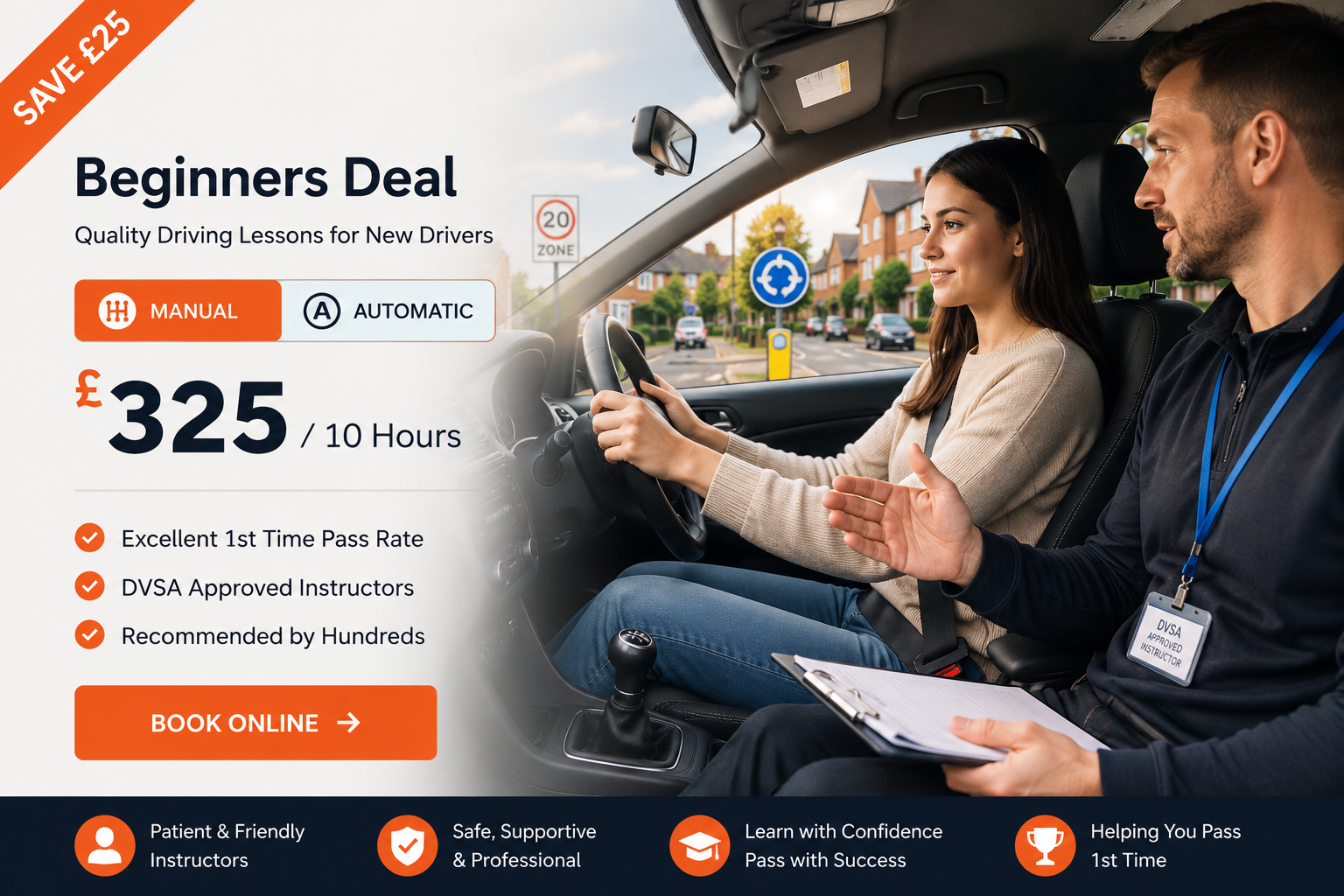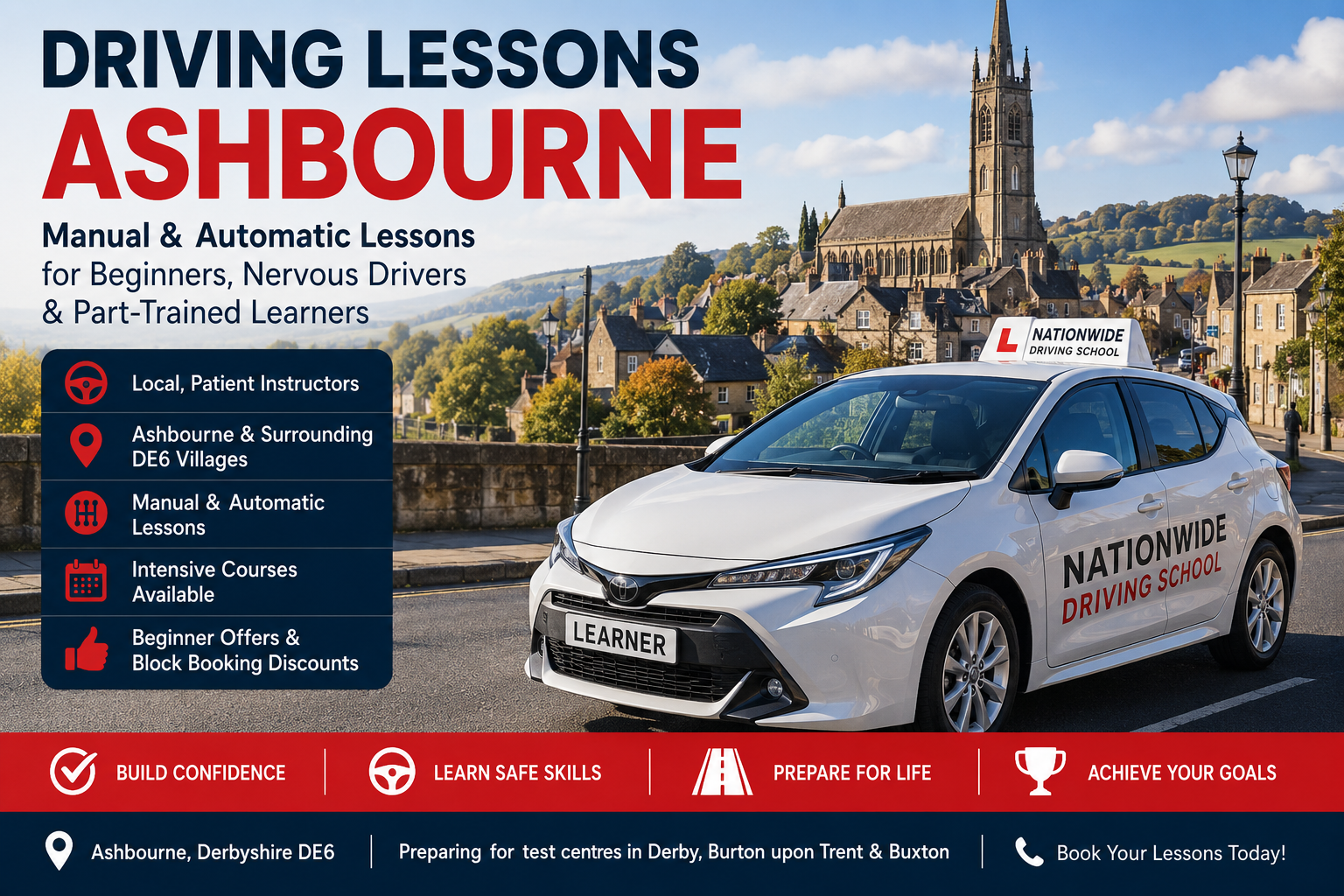
Learning to drive in Ashbourne can feel exciting and unfamiliar at the same time. A good start is not about rushing into difficult traffic. It is about understanding the car, developing a safe routine and building confidence in manageable stages. Ashbourne offers a useful mixture of local streets, junctions, rural roads and routes connecting with the wider Derbyshire area. This guide explains what a beginner can expect and how to prepare for steady progress.
Before Your First Driving Lesson
You need a valid provisional driving licence and suitable eyesight before driving on public roads. Bring any glasses or contact lenses that you need for distance vision. Wear comfortable footwear that lets you feel and operate the pedals safely. Your instructor may also ask about previous experience, medical conditions that affect driving and your main goals.
Do not worry if you know nothing about the controls. A first lesson should introduce the seating position, mirrors, seat belt, steering, pedals and basic safety checks. Asking questions is part of learning, not a sign that you are behind.
The First Skills You Will Practise
Most beginners start in a quiet and suitable area. You may learn the cockpit drill, moving off, stopping, steering and mirror use. Manual learners will also work on clutch control and simple gear changes. Automatic learners will learn how to select the correct driving mode and control low-speed movement safely.
These basics support every later topic. A learner who can move away safely, stop accurately and check mirrors at the right time has a stronger foundation for junctions and traffic.
Building Confidence on Ashbourne Roads
As control improves, lessons can move towards residential streets, parked vehicles, meeting traffic and different types of junction. Ashbourne’s road environment may change quickly between town and rural driving. This makes early planning important. You need time to notice signs, road markings, bends, pedestrians and changes in the speed limit.
Your instructor should choose routes that fit your current ability. A challenging route can be useful when you are ready, but pushing too quickly can create avoidable pressure.
Learning to Handle Rural Roads
Rural roads are not automatically safe because traffic looks light. Bends can hide cyclists, walkers, animals, slow vehicles or oncoming traffic. Road width and surface condition can also change. Select a speed that allows you to stop within the distance you can see to be clear.
Practise looking well ahead, using passing places correctly and responding early to warning signs. Avoid treating the speed limit as a target. Safe speed depends on the view, road condition, weather and other road users.
When Will You Start Manoeuvres?
Parking and reversing exercises usually begin after you have enough basic control and observation. You may practise parallel parking, bay parking, pulling up on the right and reversing, or other exercises used in current practical tests. The exact order is less important than learning slow control and all-round observation.
A manoeuvre does not need to look perfect immediately. Learn a clear routine, correct small errors safely and understand when to pause for another road user.
Preparing for Independent Driving
Later lessons should include following road signs or directions from a sat-nav. Independent driving tests whether you can apply what you have learned without constant prompting. It does not mean driving without support before you are ready.
Mock tests can reveal patterns in your driving, such as late mirror checks, rushed decisions or speed changes. Use the result as a lesson plan rather than treating a mock-test fault as a failure.
Making Progress Between Lessons
Progress is easier to recognise when each lesson has a clear beginning and review. Before moving away, agree one or two main goals with your instructor. At the end, discuss what improved, what still needs support and what the next lesson should cover. This makes the learning process more organised and prevents one difficult moment from defining the whole session.
If you have access to legal and properly insured private practice, use the same routines taught in lessons. Ask the supervising driver to support the agreed plan rather than introducing several different methods. If private practice is not available, you can still prepare by reviewing road signs, using theory-test resources and thinking through recent feedback. Mental preparation cannot replace driving, but it can help you understand the reason behind each action.
Safe Decisions Matter More Than Fast Progress
Learning speed varies from person to person. Comparing lesson numbers with friends can create pressure and encourage rushed decisions. A safer measure is whether you can repeat a skill on different roads without frequent prompts. You should be able to recognise hazards, choose a suitable speed and explain why a decision was safe.
Ashbourne learners may encounter changing road widths, rural bends, gradients and busy periods in town. Weather and daylight can also alter the same route. Experience in varied conditions helps, but your instructor should introduce each challenge when your core control and observation are ready.
Planning Your Ashbourne Driving Lessons
A clear lesson plan should match your experience, confidence and weekly availability. Nationwide Driving School offers manual and automatic tuition, beginner lessons, refresher training and intensive options subject to local instructor availability. Your instructor can agree realistic goals, review progress and focus each lesson on the skills that need the most attention.
New learners can check our beginner driving lesson offers. Learners who want to reserve several sessions can also review our block-booking discounts. If you are considering faster progress, read the details on our intensive driving courses and booking page. Course contents and practical-test arrangements vary, so check the course information or contact us before paying.
Reliable Information for Learner Drivers
Use official information alongside your lessons. Read The Highway Code, check road-safety advice, use the driving-test centre finder, and book a test only through the official GOV.UK service. You can also check driving-school and instructor guidance.
Frequently Asked Questions
How long is a first lesson?
Lesson duration depends on the booking. Your instructor should explain the plan and allow time for a short review.
Do I need private practice?
Private practice can help when it is legal, properly insured and supervised, but professional lessons can still be planned without it.
Can a parent arrange lessons?
Yes, although lesson goals and progress should also be discussed directly with the learner.
When should I book a practical test?
Discuss readiness with your instructor and check official test availability before choosing a date.
Book Driving Lessons in Ashbourne
Explore our main driving lessons in Ashbourne page for current service information. To discuss availability, call Nationwide Driving School on 0800 048 9075 or send a WhatsApp message to 07308 897711. Before choosing a course, read recent Nationwide Driving School reviews.
Related Links
- Ashbourne driving lessons
- Book online and view intensive courses
- Beginner offers
- Block-booking discounts
- Theory Test Pro support
Connect With Us on Social Media